Call: 08045803411
 Send Inquiry
 Send Inquiry
Commercial Shell and Tube Heat Exchangers
Price 125000 INR/ Unit
MOQ : 1 Unit
Commercial Shell and Tube Heat Exchangers Specification
- Temperature
- High-temperature
- Condition
- New
- Usage
- Industrial
- Size
- Different Available
- Product Type
- Tube Heat Exchanger
- Color
- Silver
Commercial Shell and Tube Heat Exchangers Trade Information
- Minimum Order Quantity
- 1 Unit
- Payment Terms
- Cash Advance (CA)
- Supply Ability
- 50 Units Per Month
- Delivery Time
- 5 Days
- Main Domestic Market
- All India
About Commercial Shell and Tube Heat Exchangers
Backed by a team of adroit professionals, we are engrossed in supplying Shell and Tube Heat Exchangers that are advanced industry-specific devices. These are used typically to transfer heat from one medium to another. Owing to their high build quality, unmatched performance, and longevity, these are preferred by our customers. Shell and Tube Heat Exchangers do not degrade in quality or become inferior in the long run. Our customers can approach us to get the heat exchangers at a reasonable price.
Specification
|
Design Service |
Available |
|
Service |
OEM |
|
Usage/Application |
Hydraulic and Industrial Process |
|
Brand |
PM |
|
Color |
Redoxide |
|
Liquid Flow Rate (Meter Cube per Hour) |
100 |
|
Capacity (Meter Square) |
50 |
|
Outlet Temperature |
600 |
|
Inlet Temperature |
700 |
|
Maximum Working Pressure |
15 KG |
|
Primary Exchanger Material |
Steel |
|
Type |
Air-Cooled,Tube |
|
Material of Construction |
MS , CS , SS , Copper, Brass, Monel |
|
Medium Used |
Oil,Air,Water |
High-Efficiency Heat Transfer System
Our Shell and Tube Heat Exchangers are engineered for exceptional thermal transfer, suitable for industrial applications involving high temperatures. Designed in India, they feature a sturdy, corrosion-resistant silver finish and are available in multiple sizes to fit diverse installation requirements. These exchangers are trusted for consistent and long-term performance even under challenging conditions.
Versatile Industrial Use
With adaptability at the forefront, these heat exchangers suit a range of industrial sectors. Whether youre managing chemicals, petrochemicals, or energy production, our heat exchangers accommodate rigorous workloads while ensuring optimal heat exchange. As exporter, importer, manufacturer, and service provider, we support seamless integration and reliable after-sales service across India and beyond.
FAQs of Shell and Tube Heat Exchangers:
Q: How do Shell and Tube Heat Exchangers work in high-temperature industrial applications?
A: Shell and Tube Heat Exchangers operate by passing one fluid through the tubes and another around the outside of the tubes within a sealed shell, enabling efficient heat transfer between the fluids. Their design supports effective handling of high-temperature differences typically found in industrial processes.Q: What are the key benefits of using these heat exchangers in industrial settings?
A: Key benefits include high thermal efficiency, durability in high-temperature environments, customization in size, and low maintenance requirements. Their robust silver construction ensures longevity, making them ideal for demanding industrial applications.Q: When should you consider implementing a Shell and Tube Heat Exchanger in your facility?
A: You should consider installing these exchangers when your process involves transferring heat between fluids at high temperatures, or when increased energy efficiency and robust heat management are crucial for operational success.Q: Where are Shell and Tube Heat Exchangers commonly used within industry?
A: They are commonly used in chemical plants, oil refineries, power generation facilities, and HVAC systems, among other industrial environments in India and worldwide. Their adaptability makes them suitable wherever high-temperature heat exchange is required.Q: What is the manufacturing process for these heat exchangers?
A: The process involves selecting suitable high-temperature resistant metals, fabricating the shell and tube components, and assembling them to ensure leak-proof, efficient heat transfer. The units undergo stringent testing to ensure compliance with industry standards.Q: How can users benefit from your exporter, importer, and service provider capabilities?
A: As a comprehensive exporter, importer, manufacturer, and service provider in India, we offer end-to-end support including product selection, export/import documentation, installation, and after-sales maintenance, ensuring you receive reliable and tailored solutions for your heat exchange needs.Q: What maintenance is required for Shell and Tube Heat Exchangers to ensure optimal performance?
A: Regular cleaning of tubes, periodic inspections for leaks, and ensuring all connections remain secure help maintain efficiency. Our service support in India assists clients in keeping their exchangers functioning at peak performance.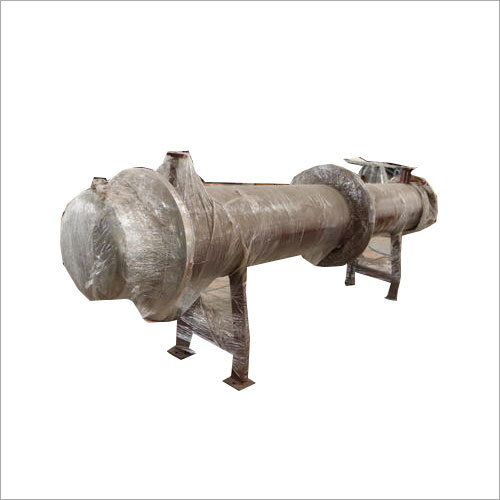
Tell us about your requirement

Price:
Quantity
Select Unit
- 50
- 100
- 200
- 250
- 500
- 1000+
Additional detail
Mobile number
Email

More Products in Heat Exchangers Category
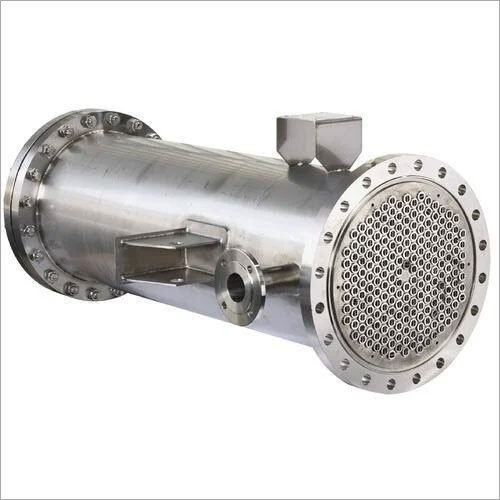
Shell And Tube Condensor
Price 125000.00 INR / Unit
Minimum Order Quantity : 1 Unit
Size : Different Available
Condition : New
Color : Silver
Product Type : Tube Heat Exchanger

Finned Tube Heat Exchangers
Price 150000 INR / Unit
Minimum Order Quantity : 1 Unit
Size : Different Available
Condition : New
Color : Silver
Product Type : Finned Tube Heat Exchangers
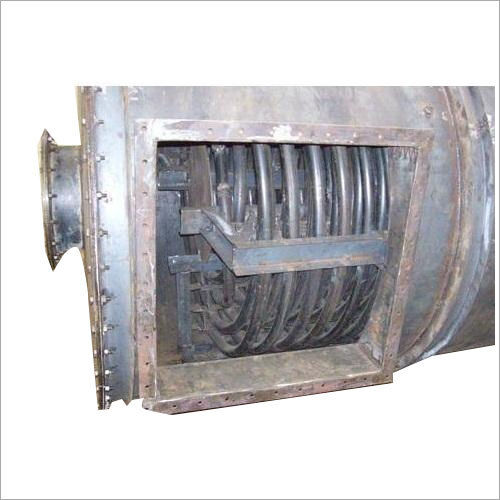
U Tube Bundle Heat Exchangers
Price 126000 INR / Unit
Minimum Order Quantity : 1 Unit
Size : Different Available
Condition : New
Color : Silver
Product Type : Heat Exchangers
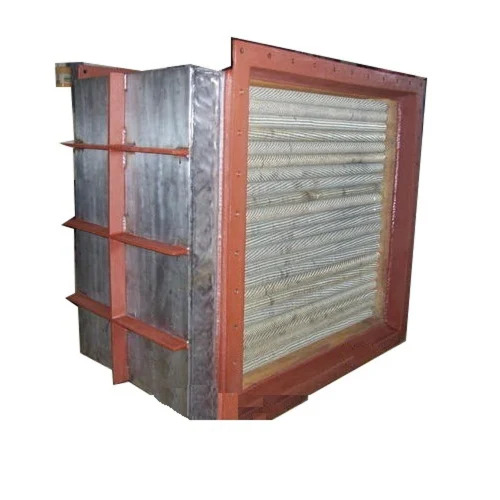
Commercial Finned Tube Heat Exchangers
Price 150000 INR / Unit
Minimum Order Quantity : 1 Unit
Size : Standard
Condition : New
Color : Silver
Product Type : Finned Tube Heat Exchangers

Contact Details
PM PROJECTS AND SERVICES PRIVATE LIMITED
GST : 23AADCP5884B1ZK
- 61, Anand Nagar - Chitawad Road,Indore - 452001, Madhya Pradesh, India
- Phone :08045803411
 Send Inquiry
- Factory : 10,11,21,22, AKVN Ind Area - Nimrani - Dist Khargone - 451660
09926633398 , 09826052924

Developed and Managed by Infocom Network Private Limited.
